MagiPort
Branded destination portals that help travel companies earn from the trip after the booking.
- My role, through Performous
- Owner. Concept and product build
- Stage
- Prototype
Overview
MagiPort is a business to business travel technology venture. It gives airlines, rail and ferry operators, holiday companies, event organisers and loyalty programmes a branded destination portal for each traveller, reached from the booking confirmation. The portal suggests places to stay, things to do, transfers and local guidance matched to the trip, all under the client's own brand. MagiPort builds and runs the portal for the client, and the commercial model is a share of the affiliate revenue generated by bookings made through it. The product runs on the Visit Network platform.
The opportunity
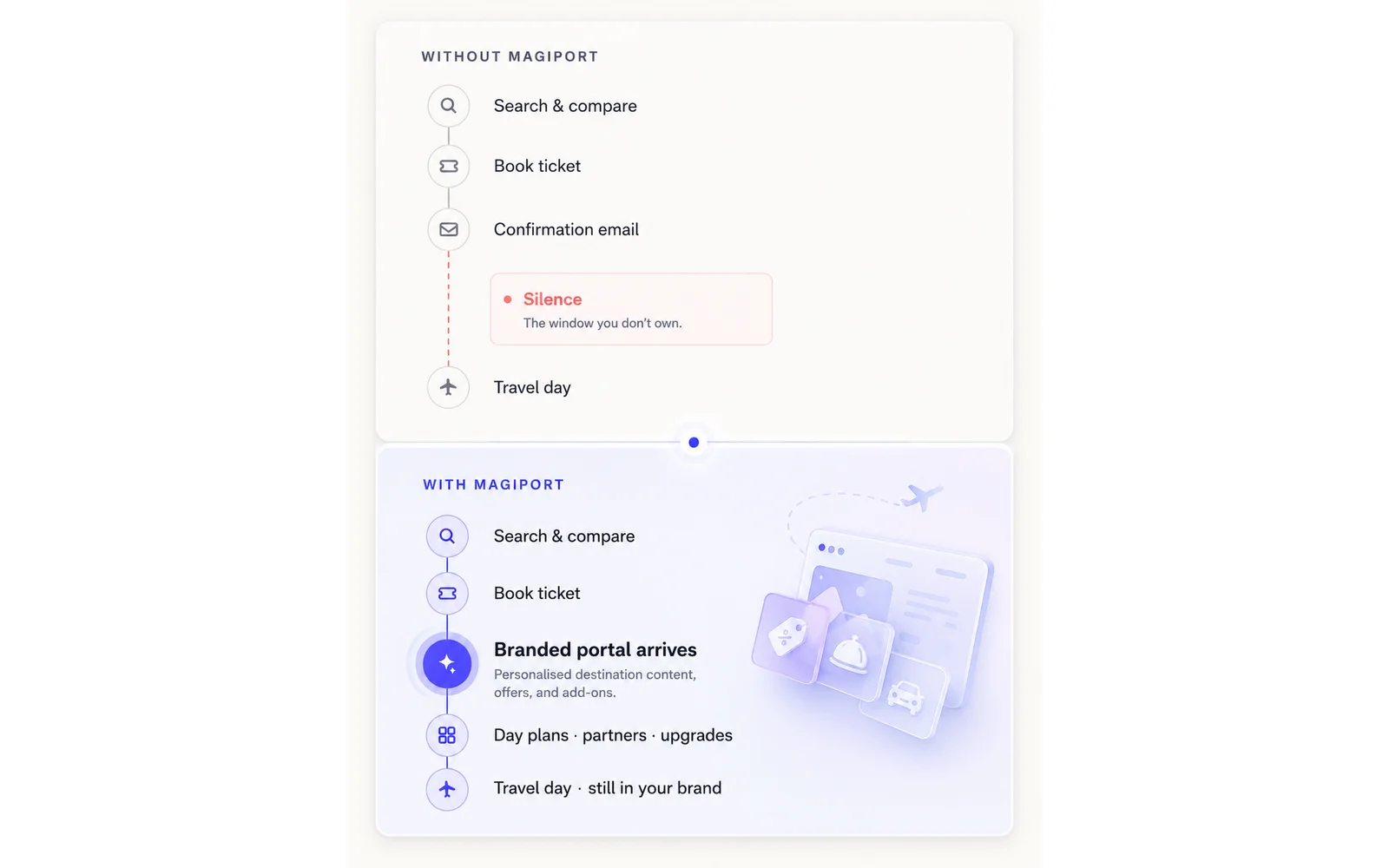
Travel companies already hold the most valuable asset in travel marketing: a customer who has booked and is about to go. Most send a confirmation email and a PDF, then say little until departure day.
That gap is exactly when travellers plan hotels, tours and transfers, usually with someone else. A branded portal lets the company stay with its customer into the destination and share in the revenue, without building or running anything itself.
What was built
Branded portals from configuration
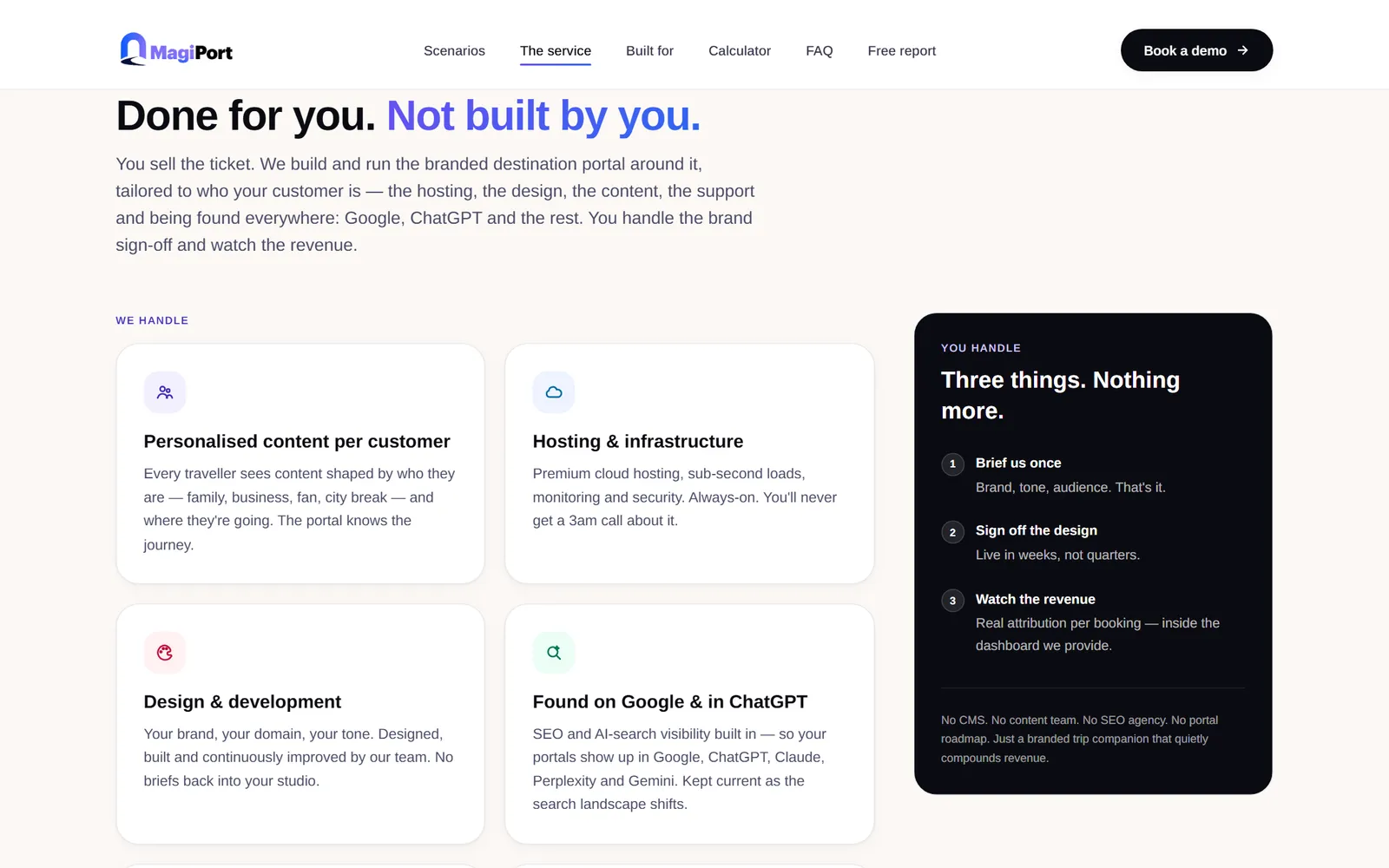
Each client is a set of brand tokens, copy and audience types on a shared engine, so a new portal is a setup task rather than a new build.
Personalised recommendations
A transparent scoring engine ranks hotels, tours, restaurants and guides by the traveller's party, interests, distance, timing and weather. Travellers don't need an account and can save lists anonymously.
Destination content
Portals draw on the guides, attractions and bookable inventory already maintained on the Visit Network platform, so each one launches with real depth.
Click attribution
Every outbound booking click is recorded against the portal and the traveller's journey, the basis for sharing revenue with the client.
Sales tools
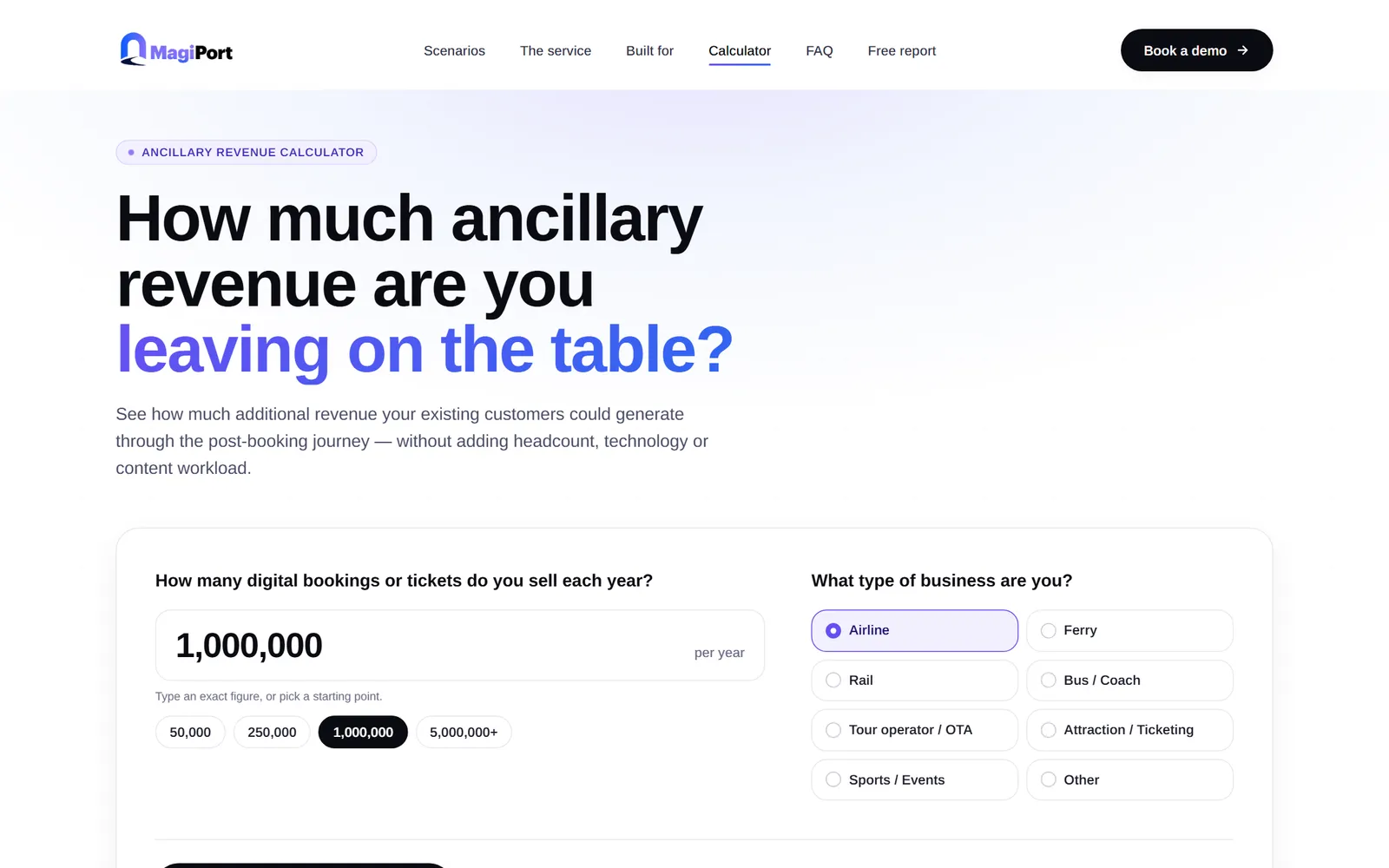
A public revenue calculator models the opportunity using a prospect's own volumes, alongside demonstration inboxes and a presentation deck prepared for each prospect.
What each part is for
Shared engine
The cost of a new client portal is mostly configuration and content, which keeps the done for you model economical.
Revenue share
Clients gain a new ancillary income line with no upfront development and no team to run it.
Existing audience
Revenue comes from customers the client has already paid to acquire, rather than from new advertising spend.
Revenue calculator
Prospects can size the opportunity for themselves. Its outputs are illustrative estimates based on stated assumptions, not results.
How it was built
Built with AI coding tools
The portal engine was built inside the Visit Network codebase with AI coding tools, reusing its content, inventory importers and affiliate layer instead of starting again. The team also uses AI to prepare destination articles and imagery for demonstrations.
Integrations
- Visit Network platform
- Viator
- Google Places
- OpenWeatherMap
- Supabase
- Vercel
Gallery
More ventures
All companiesCyclists.com
A global library of cycling routes, with GPX files, road facts and a simple way to organise group rides.
Digital MarketingOn the Spot
A Glasgow internet company since 1997, rebuilt as a modular growth platform for small businesses.
Travel & PublishingVisit Network
A network of destination travel sites running on one shared publishing and booking platform.